Protein Synthesis Lab Analysis and Conclusion
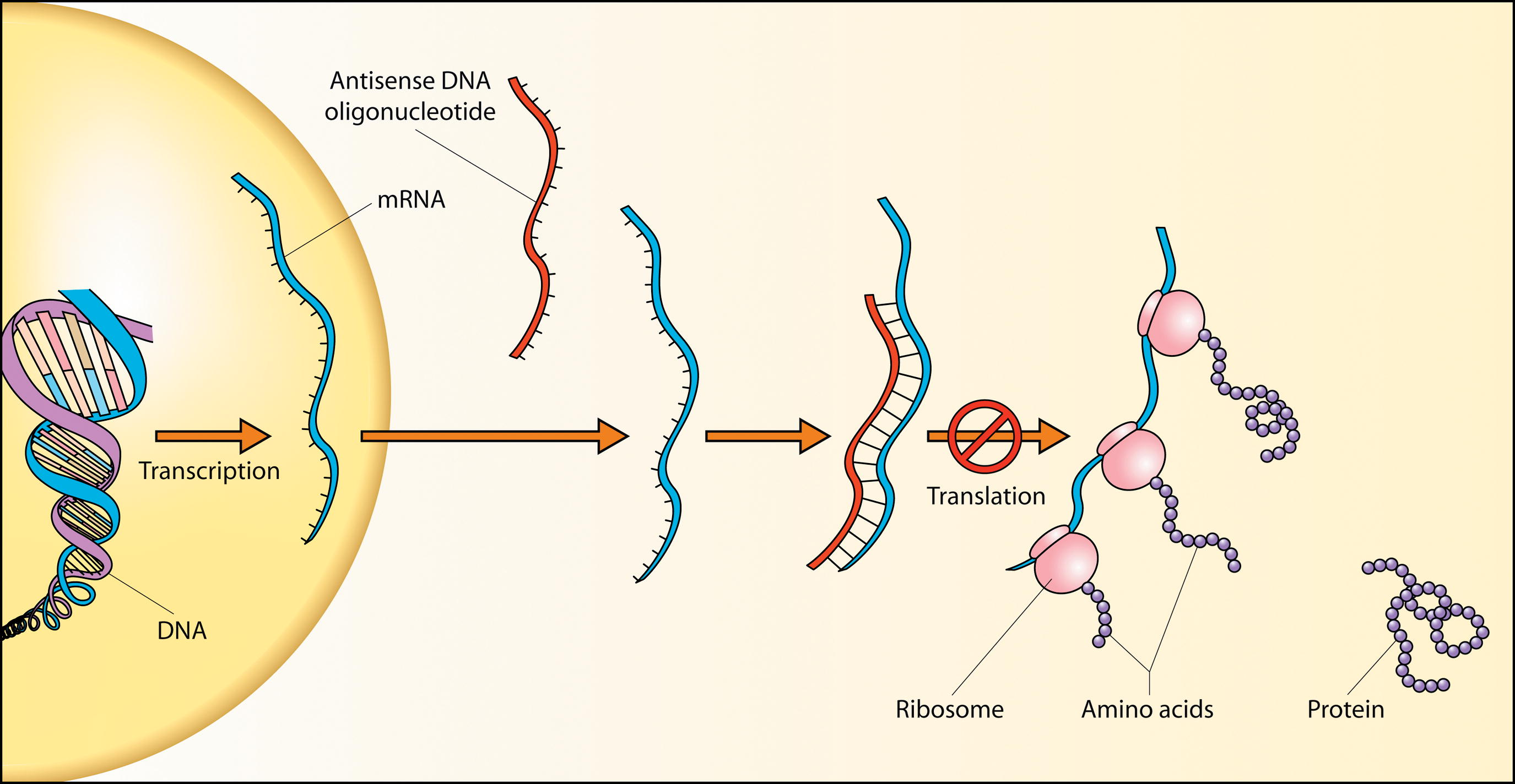
It is a little complex to make a protein. There are two main steps that are broken down into tinier steps. First is transcription and then translation. During transcription, an enzyme copies a gene which is a section of DNA. The copy produced is called messenger RNA or mRNA for short. RNA replaces thymine with uracil and RNA only has one strand. The mRNA then travels to the ribosomes on the endoplasmic reticulum, leaving the nucleus. In translation, mRNA bonds with a ribosomes. The ribosomes will read the RNA and produce amino acids according to the codons of the RNA strand. The amino acids are bonded and then fold together multiple times to make a protein.
https://upload.wikimedia.org/wikipedia/commons/1/19/Antisense_DNA_oligonucleotide.png
Based on this experiment, it seems that deletion has the greatest effect on the proteins made, especially when at the beginning of code. Insertion comes in second with substitution last in terms of the greatest to least effect on proteins. For all of these types of mutations, changes at the beginning of a code is always going to have a greater effect on the protein than at the end of a protein. If T was near the end, the protein would've barely changed.
_DNAzyme.png)
https://upload.wikimedia.org/wikipedia/commons/b/b0/17E_(Pb2%2B-selective)_DNAzyme.png
In step 7, I got to choose my mutation I made to the DNA sequence and I chose deletion because in the previous pre-fabricated lab, deletion seemed to have the greatest effect of the protein structure. It was far worse that the insertion and substitution because the substitution didn't change anything while the insertion changed the amino acids read. Deletion caused the amino acid production to cut off much sooner, resulting in a much shorter protein. It does matter where the mutation occurs because when it is further back, there is less of a chance that the mutation is going to matter so much and less of a chance that the protein will be really messed up.

https://upload.wikimedia.org/wikipedia/commons/thumb/9/9b/MRNA.svg/2000px-MRNA.svg.png
Mutations can effect the way you digest food or whether or not you will get enough oxygen to your blood. Heterochromia is a mutation that alters a phenotype in humans. It is usually the difference in iris color, but it can apply to skin and hair as well. There are many types of heterochromia: partial heterochromia, central heterochromia, and incomplete heterochromia. Partial heterochromia is when some one's iris had two different colors in the same area. Central heterochromia is when the center and outer part of your irises are different colors. Incomplete heterochromia is when one iris is a different color from the other.

https://c2.staticflickr.com/6/5816/21481529599_5eec0e4ac0_b.jpg
Comments
Post a Comment